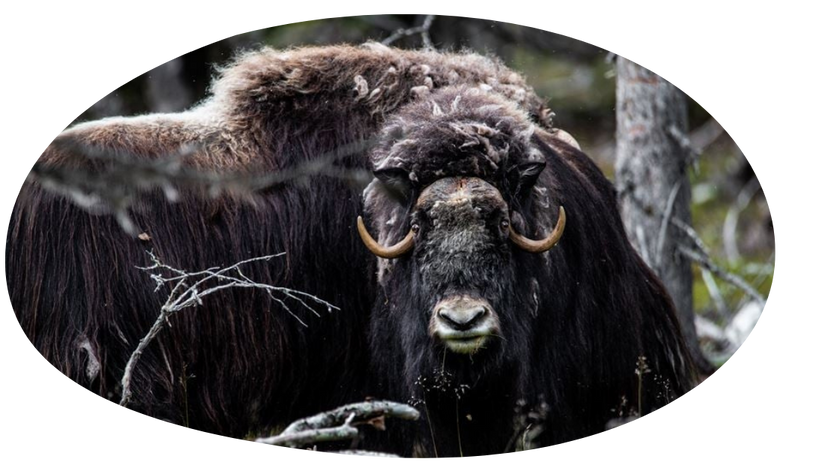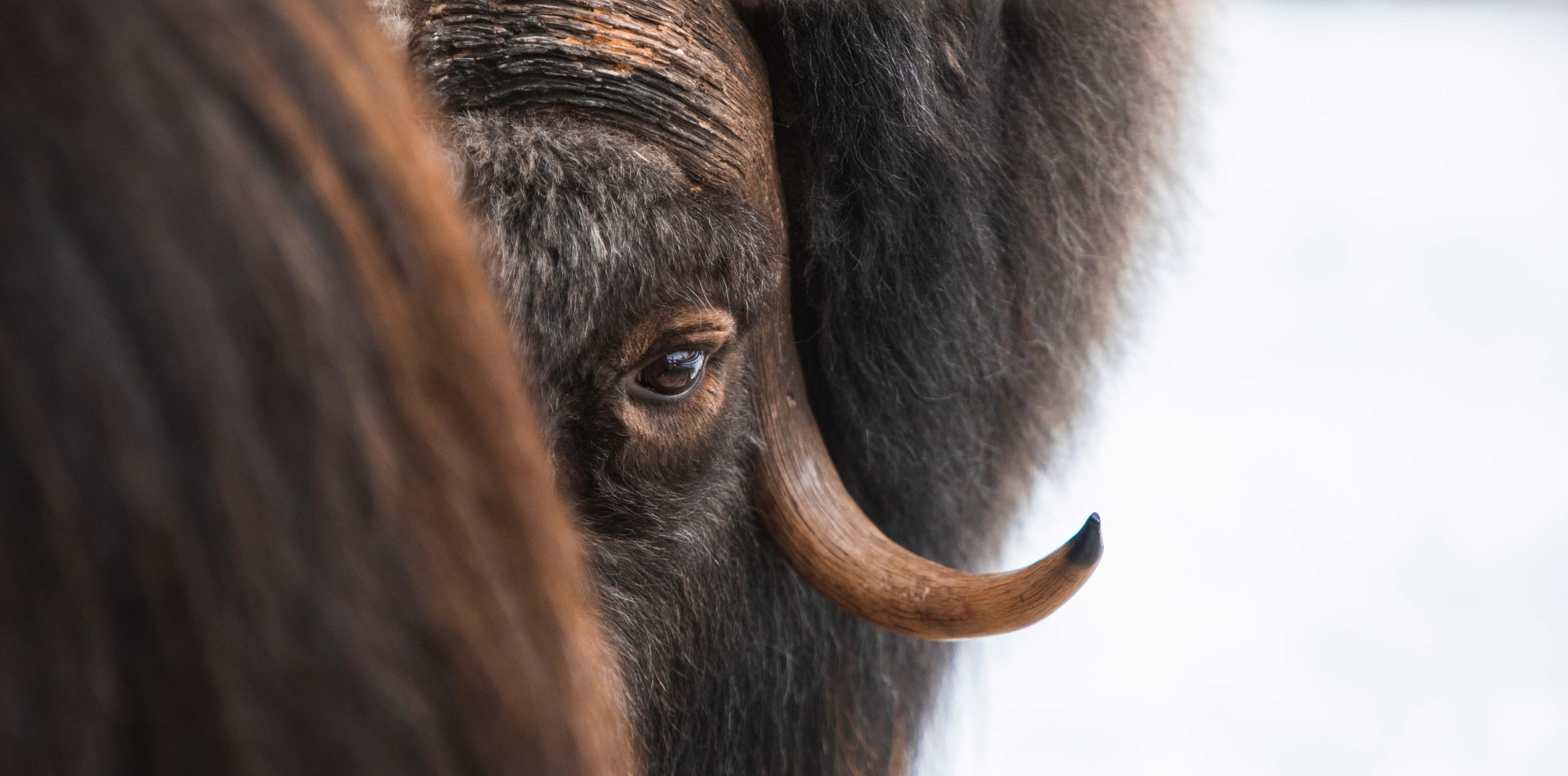
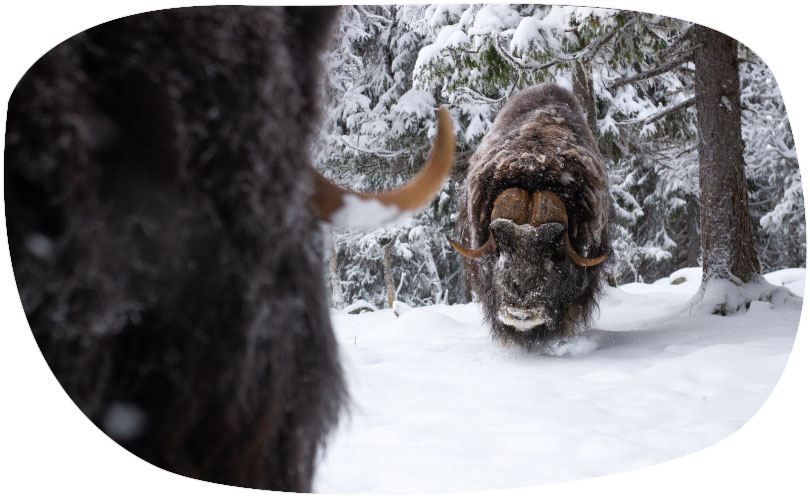
Step into the enchanting world of the muskoxen at the Muskox Centre in Tännäs, Härjedalen, where you have the opportunity to encounter musk oxen in their natural habitat. Guided by our knowledgeable staff, we take you back in time as you explore the wilderness of Härjedalen. Book your guided tour now and contribute to our vital mission of protecting the muskoxen and preserving the Härjedalen wilderness for future generations.
When you visit the enclosure, you are not only embarking on an extraordinary nature journey, but also supporting the enclosure’s crucial work in research, breeding, and knowledge dissemination.
Our Guided Tours
Welcome to an enchanting journey in the serene wilderness of Tännäs. Our guided tour begins with a short walk to our lookout tower where the vast wilderness unfolds. En route to our enclosure, our knowledgeable guide will tell you the rich history of the muskox.
As you step into the enclosure, a magical encounter awaits where you will meet a prehistoric animal! Round off your experience in our exhibition and satisfy your curiosity.
Our adventure will commence at Härjebrygg in Tännäs, from where we will drive 7 kilometers; you can either follow in your own car or, if space permits, join us in our guide bus.
- Duration: 1-1.5 hours.
- Dress according to the weather.
- No pets allowed.
- Accessibility: Those with walking difficulties are welcome; contact us for more information.
- Caravans and motorhomes can easily navigate the terrain.
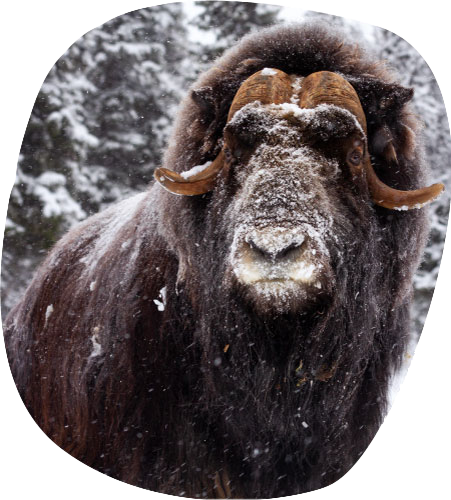

Live from the Muskox centre
Are you curious to see what the muskox are up to?
You can watch them here via our cameras, live from the centre!
What does our visitors say?
-
En plats som drivs ideellt och som enbart fungerar tack vare det vi som besökare betalar vid guidning. Vi är så glada över att ha besökt platsen. Kunnig … More guide som mötte upp vid ölbryggeriet (!) och sedan fick vi som bokat visning välja om vi ville åka i bilen som tillhörde Myskoxcentrum eller åka egen bil efter guidebilen. Platsen där djuren bor ligger ett antal kilometer bort. Intressant att höra guiden berätta om dessa urtidsdjur och deras historia på jorden. Vi hade tur denna dag, då djuren var vid matstället och guiden hade plockat med sig lite extra gott att äta till dem. Tjuren Brutus var lite extra vaksam över sina damer denna dag och blev sur när guiden kom för nära vid matningen. Söta små kalvar som inte var rädda. Hoppas denna fina plats får vara kvar och att den får ekonomiskt stöd så att arbetet med djuren kan fortsätta och göra alla uppmärksamma på att de fortfarande finns. Fin liten souvenir butik där det fanns allehanda att köpa, allt med anknytning till myskoxarna. Bokning innan besök rekommenderas.
-
Fantastisk naturupplevelse med en otroligt kunnig guide.
Härligt att få se dessa urtidsdjur! -
Fantastisk att få se de underbart fina myskoxarna i verkligheten. Vi blev guidade av Elin som på ett engagerande och proffsigt sätt berättade om myskoxarnas … More historia och hur läget är idag. Kan verkligen starkt rekommendera ett besök här dels för att få se de fina djuren och att man genom ett besök kan stötta den ideella föreningen som jobbar för bevarandet av myskoxarna i Sverige.
-
Tack vare centrets arbete finns möjlighet att få se dessa urtidsdjur på nära håll via guidade turer.


#Myskoxcentrum #Tännäs #Härjedalen


Frösta har fixat håret! Jag tror hon kör på en teletubbie-stil! Eller kanske punkare? 💜Eller enhörning? 🦄 Eller behöver hon en antenn på huvet för att få in radiosignaler?📡
Oavsett vad hennes tanke är med hårtussen som står rakt upp så tycker jag att hon förtjänar att höra att vi uppskattar hennes känsla för mode! 💅🪮
#myskoxhägn #tännäs #myskoxcentrum #funäsdalen #muskox #myskoxhägnet #muskoxen #tännäskröket #wildlife #härjedalen #vilddjur #urdjur #funäs #muskoxlove #wildanimals #nature #urtidsdjur #notapet #animals #djur #djurochnatur #naturelovers #neassa #istiddjur #myskoxar #aminal #myskoxcentrumihärjedalen #härligahärjedalen #muskoxlife #myskoxe

MYSKOXGUIDE FÖR EN DAG
Under lågsäsongen erbjuder vi dig som är intresserad av att testa på arbetet som myskoxguide att hänga med till hägnet en halvdag. Där får du testa på det vardagliga arbetet som myskoxguide. Du kommer få vara med att utfodra djuren, genomföra våra hägnkontroller, se bakom kulisserna och ställa alla frågor du undrat över i lugn och ro!
För att både djuren och ni ska få bästa möjliga upplevelse är vi max 5 personer per tillfälle. Kostnaden är 500kr/person oavsett ålder.
Låter det som något för dig? Tveka inte att höra av dig på vår mail info@myskoxcentrum.se

Hej! Jag heter Frösta och idag vill jag visa er vilken toppengod pinne jag hittade! Eller ja pinnen i sig var inte särskilt god. Men på pinnen växte skägglav! Och skägglav, det är suuuuupergott! Det var bara det jag ville säga, ha en bra dag nu alla tvåbenta varelser där ute! //Frösta

Mysiga mular!
Har ni tänkt på att myskoxen har en ”get-mule”? Om man jämför en ko-mule och en get-mule så blir det väldigt tydligt att myskoxen är betydligt närmare släkt med geten än nötkreatur.
#myskoxhägn #tännäs #myskoxcentrum #funäsdalen #muskox #myskoxhägnet #muskoxen #tännäskröket #wildlife #härjedalen #vilddjur #urdjur #funäs #muskoxlove #wildanimals #nature #urtidsdjur #notapet #animals #djur #djurochnatur #naturelovers #neassa #istiddjur #myskoxar #aminal #myskoxcentrumihärjedalen #härligahärjedalen #muskoxlife #myskoxe
Project muskox 2030
Muskox 2030 is a conservation network established in 2020 with the goal of investigating the future of the Swedish muskox population and its impact on biodiversity in the mountain ecosystems. This is being done through surveys and research projects. We at the Muskox Center are proud to be part of the project, which is run in collaboration with Vildriket, Lycksele Zoo, and Skåne Zoo. The project collaborates with CNRS/University of Toulouse and the Swedish University of Agricultural Sciences, with support from the Swedish Society for Nature Conservation in Western Härjedalen and the Swedish Association of Zoos and Aquaria.